





Why Vision Screenings Miss Hidden Issues
Why Vision Screenings Miss Hidden Issues
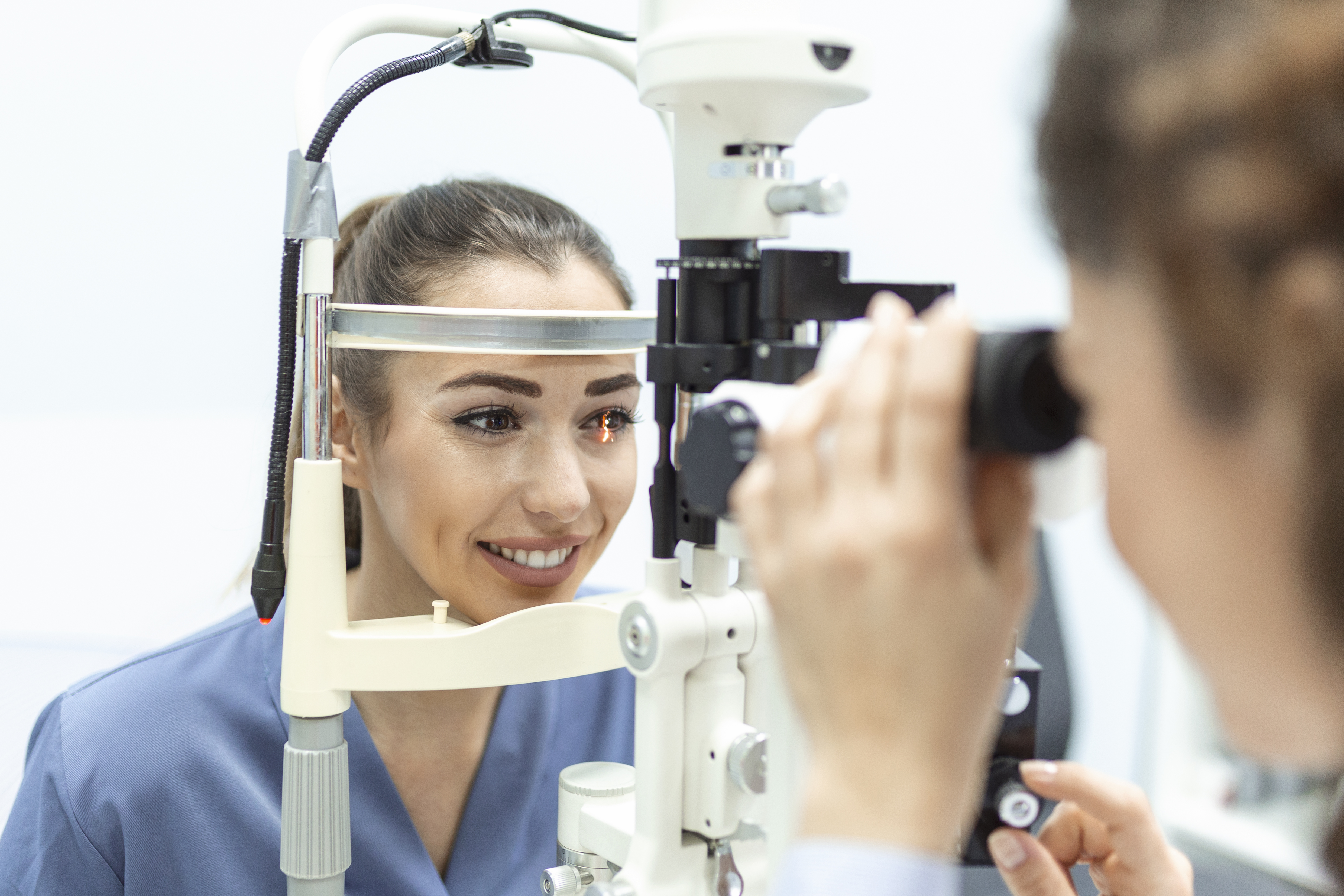
At first glance (pun gently intended), a vision screening seems reassuringly straightforward. You stand, you squint, you recite a tidy row of letters. If you can distinguish an E from an F across the room, you’re sent on your way with a cheerful nod. All is well, yes?
Not necessarily.
At University Optometric Center, we often meet patients who have “passed” a screening—sometimes many times—yet struggle with headaches, eye strain, blurred vision at the computer, or difficulty focusing when reading. The reason is elegantly simple: vision screenings are designed to be brief and efficient. Comprehensive eye exams are designed to be thorough.
And in eye care, thoroughness matters.
Screenings Test Sight, Not Vision
There’s a meaningful distinction between eyesight and vision. Eyesight refers to clarity—how well you can see at a distance. Vision encompasses how your eyes team together, track, focus, and communicate with your brain.
A standard screening typically measures distance visual acuity. It rarely evaluates:
Eye teaming and binocular coordination
Focusing flexibility (accommodation)
Eye tracking and movement accuracy
Peripheral vision
Depth perception
Ocular health
In short, you may see clearly—and still experience functional vision problems.
Hidden Issues Beneath the Surface
Some visual conditions are subtle and cleverly disguised. For instance:
A child may read the 20/20 line but struggle with eye tracking, causing skipped words and reduced reading comprehension.
An adult working long hours on digital devices may have accommodative dysfunction, leading to fatigue and blurred near vision.
Early eye diseases may present without noticeable symptoms at all.
Screenings are not equipped to detect early signs of glaucoma, macular degeneration, retinal abnormalities, or systemic health indicators such as hypertension or diabetes that may first appear in the eyes.
A comprehensive eye exam, however, examines the internal and external structures of the eye, often using advanced imaging technology. It evaluates not just how you see—but how your visual system functions as a whole.
Children: The Quietly Overlooked
Vision screenings in schools serve an important purpose, but they are not substitutes for a full evaluation. Children are remarkably adaptive. If one eye sees poorly, the brain may simply favor the stronger eye. If focusing is inconsistent, they may assume that’s normal.
Because children lack a visual reference point for comparison, they rarely report problems. What appears to be inattention or reading difficulty can sometimes be rooted in unrecognized visual inefficiencies.
A comprehensive pediatric eye exam can uncover these nuances before they affect academic confidence and performance.
Adults: The Digital Dilemma
For adults, especially professionals and students, modern life places extraordinary demand on near vision. Screens, tablets, phones—our eyes are in constant near focus.
A vision screening does not evaluate how your eyes perform during sustained close work. Subtle imbalances can lead to:
Neck and shoulder tension
Frequent headaches
Difficulty concentrating
End-of-day visual fatigue
When we assess visual function in detail, we can tailor solutions—whether prescription adjustments, specialty lenses, or vision therapy—to restore comfort and efficiency.
The Comprehensive Difference
At University Optometric Center, we approach eye care with both precision and perspective. A comprehensive exam is not merely about letters on a chart; it is a dialogue between technology, clinical expertise, and your lived experience.
We evaluate ocular health, functional vision, refractive status, and risk factors unique to you. It is meticulous, yes—but also reassuring.
Because seeing clearly is only the beginning. Seeing comfortably, efficiently, and sustainably is the goal.
Contact our office in Irvine or Newport Beach at (949)-854-7122 or (949) 476-2870 to book an appointment.

Optometry
Services

Keep
In Touch
University Optometric Center
OC Optometry Group

