





Beyond the Big Bold ‘E’: The Peculiar Shortcomings of School Screenings in the Tale of Progressive Myopia
Beyond the Big Bold ‘E’: The Peculiar Shortcomings of School Screenings in the Tale of Progressive Myopia
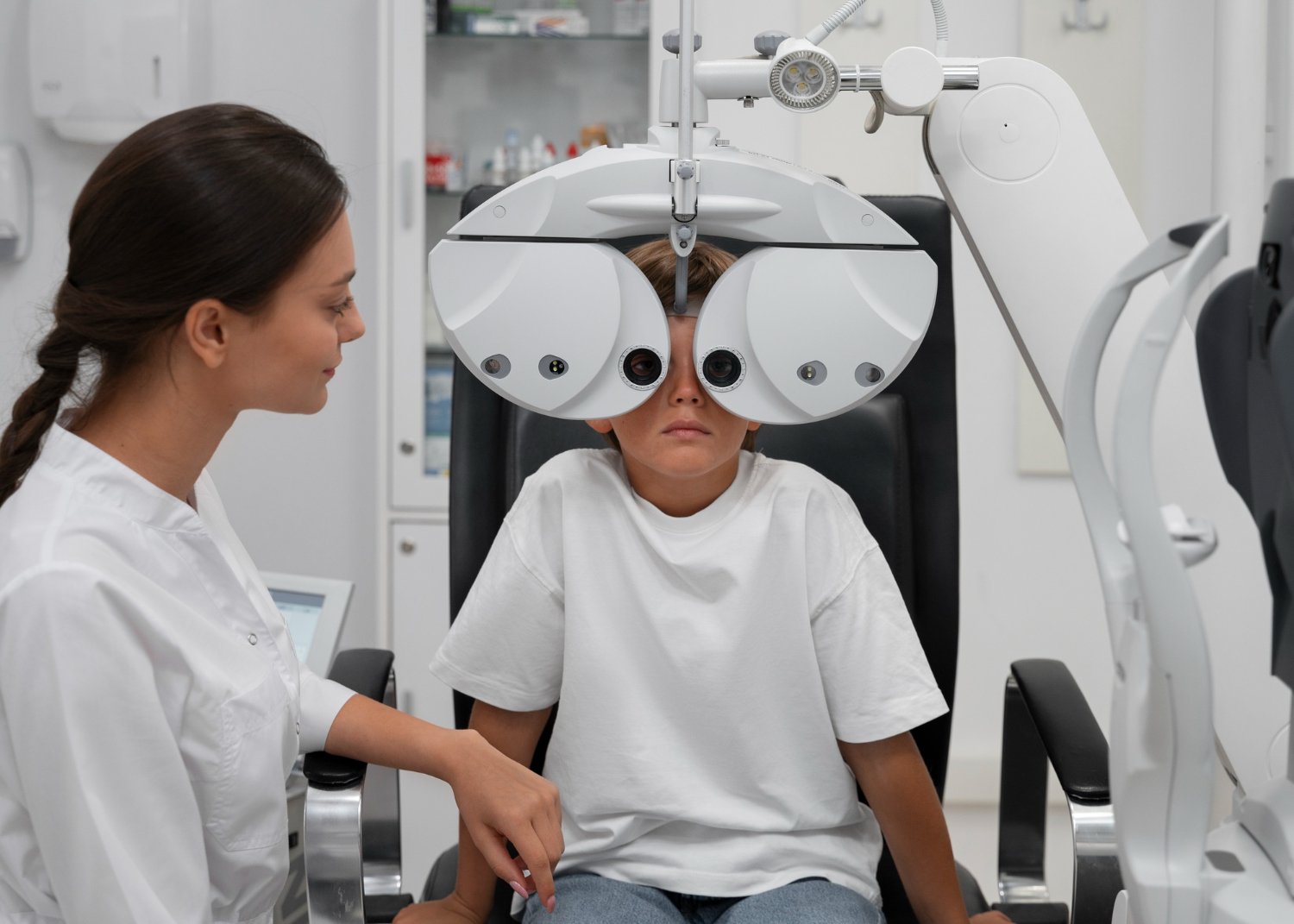
Ah, the classic school vision screening. Picture it: a bustling nurse's office, a somewhat battered Snellen chart illuminated on the wall, and the triumphant reading of the elusive bottom line by a nervous but eager student. It is a charming childhood rite of passage, much like losing a first tooth, attempting to play the recorder, or surviving the culinary mysteries of the school cafeteria. Yet, when it comes to genuinely safeguarding your child's optical future—particularly regarding the stealthy, silent march of myopia—this cursory glance is wonderfully well-intentioned, but woefully inadequate.
Let us dispel a terribly persistent myth right here and now: achieving a victorious 20/20 vision score on a Tuesday afternoon does not inherently equate to perfect, enduring ocular health. A basic school screening is essentially a brief, frozen snapshot in a much longer cinematic feature. It asks a singular, rudimentary question: "Can this young scholar decipher a 'P' from an 'F' at a distance of twenty feet?" If the answer is yes, a proverbial gold star is awarded. If no, a standardized referral note is quietly tucked into a backpack. But myopia, dear reader, is not merely a static state of blurriness. It is a highly dynamic, stubbornly progressive condition. A bright child might miraculously bluff their way through a basic screening, squinting and guessing with spectacular accuracy, while their eyes are secretly working overtime, straining to compensate for a world that is gradually slipping out of focus. By the time the blur becomes undeniably obvious from the back row of the classroom, the myopia has already firmly unpacked its bags and settled into its new home.
To truly understand why these hallway screenings fall short of the mark, we must delve into the delightful, delicate architecture of the human eye. Progressive myopia is fundamentally a structural conundrum. As a myopic child grows, their eye tends to physically elongate, stretching backward much like a perfectly plump grape slowly transforming into a rather elongated olive. This stretching—clinically termed an increase in axial length—thins the exquisite inner linings of the eye, significantly increasing the risk of retinal detachment, early cataracts, and maculopathy in their golden years. The cheerful school administrator wielding the plastic eye-patch spoon simply does not possess the sophisticated instrumentation required to measure this microscopic, yet monumentally important, shift in ocular geography.
Here at University Optometric Center, we view a comprehensive eye examination not as a simple true-or-false test to be passed, but as a fascinating investigative journey. We look far beyond the big, bold 'E'. We utilize advanced diagnostics to map the precise topography of the cornea and measure the exact axial length of the eye to a mere fraction of a millimeter. We routinely administer cycloplegic drops—a marvelous little potion that gently pauses the eye's focusing muscles. This wondrous step allows us to uncover the true refractive error hiding beneath a young child's natural, robust ability to over-focus and mask their own nearsightedness. We are looking for the subtle, whispering clues of progression long before they manifest as a permanent architectural change in your child's delicate eyes.
Ultimately, a school screening is merely the opening sentence of a much grander story. It is a marvelous tool for catching the most glaring of visual hiccups, but it simply cannot predict the future trajectory of your child's vision or implement the brilliant modern treatments currently available to slow myopia down. To properly orchestrate your child's ocular health and ensure their world remains vivid and clear, we must move beyond the hallway chart and step into the realm of precise, proactive care.
Contact our office in Irvine or Newport Beach at (949)-854-7122 or (949) 476-2870 to book an appointment.

Optometry
Services

Keep
In Touch
University Optometric Center
OC Optometry Group

