





The Perilous Waltz of the Ill-Fitting Lens: A Cautionary Tale of Ocular Misadventures
The Perilous Waltz of the Ill-Fitting Lens: A Cautionary Tale of Ocular Misadventures
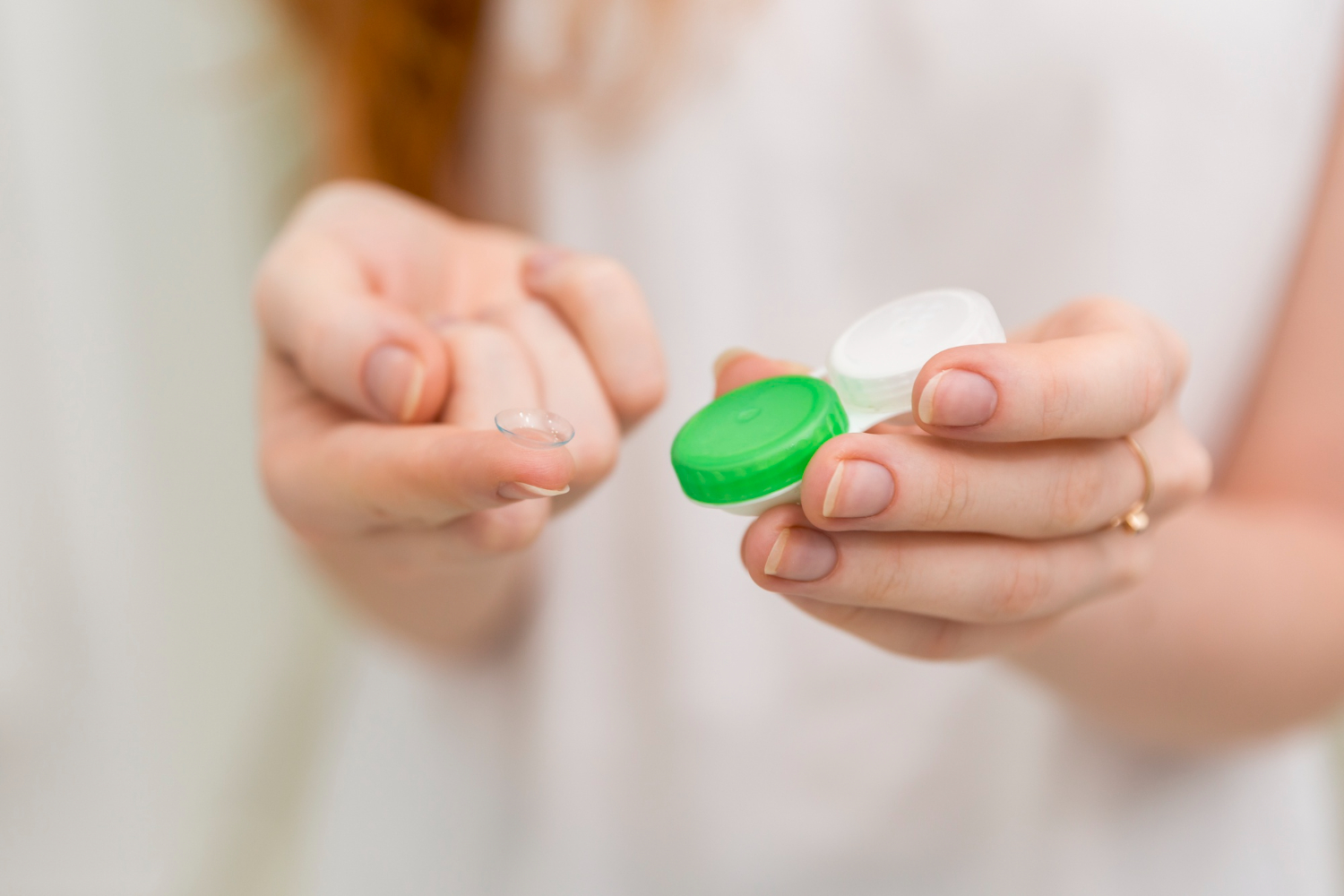
Let us take a moment to truly marvel at the contact lens. It is, quite frankly, a microscopic triumph of modern engineering—a tiny, highly breathable polymer flying saucer that rests invisibly upon the delicate tear film of your eye, bending light with mathematical grace to banish the blur of the world. It is a touch of everyday magic that allows us to see without the cumbersome frames of spectacles. Yet, amidst the wondrous convenience of popping these diminutive discs onto our corneas each morning, a rather perilous temptation often arises: the assumption that a contact lens is merely a standardized, generic commodity. It is a rather alarming notion to treat such a sophisticated medical device as a one-size-fits-all solution, akin to purchasing a pair of whimsical novelty socks. Alas, treating your magnificent eyes with such a laissez-faire attitude is a recipe for silent, stealthy disaster.
To fully understand the true, hidden dangers of a poorly fitted contact lens, one must first appreciate that the human eye is not a perfectly spherical, manufactured orb. Far from a uniform glass marble, your cornea—the clear, sweeping canopy at the very front of your eye—features a biological topography as utterly unique and wonderfully complex as your own fingerprint. It boasts microscopic hills, gentle valleys, and highly specific, sweeping curves. When a contact lens is purchased haphazardly, perhaps ordered on a whim from the depths of the internet without precise, professional measurements, you are essentially forcing your delicate, bespoke eye into a rigid, borrowed shoe. And just as a poorly fitted shoe will inevitably produce a blistering protest, an ill-fitting lens orchestrates a quiet, microscopic rebellion.
If a lens is fitted too tightly, it behaves much like an overzealous, clingy suction cup. It adheres desperately to the cornea, suffocating the underlying tissue by severely restricting the essential flow of oxygen and trapping cellular debris beneath its stagnant surface. This clandestine suffocation, known clinically as hypoxia, forces the eye into a state of cellular panic. In a desperate, starving bid for breath, the eye may begin to sprout rogue, ghostly blood vessels—a condition delightfully termed neovascularization—that creep unlawfully across the normally crystal-clear window of your cornea, threatening to permanently compromise your vision.
Conversely, a lens that sits too loosely upon the eye is entirely a different breed of menace. It embarks upon a reckless, sliding tango across your ocular surface with every single blink you take. This ceaseless, abrasive friction acts much like microscopic sandpaper, delightfully scratching away at the outermost, protective layer of your cornea. These resulting abrasions are not merely tremendously uncomfortable and intensely irritating; they serve as a grand, welcoming doorway for opportunistic bacteria, potentially culminating in a severe, vision-threatening corneal ulcer that requires immediate, intense medical intervention.
Here at University Optometric Center, we view the fitting of a contact lens as an exquisite art form, a practice requiring both rigorous scientific precision and a touch of sartorial elegance. We do not merely hand over a generic box of lenses and wish you good fortune on your journey. Instead, we utilize magnificent, highly advanced topographic mapping to measure the exact curvature of your cornea across thousands of tiny, brilliant data points. We carefully evaluate the delicate ecosystem of your tear film and ensure that your chosen lens floats with absolute, harmonious perfection, allowing your eyes to breathe deeply and remain blissfully unbothered throughout your day. Consider your contact lenses as a bespoke suit tailored specifically for your vision; you must never subject your precious sight to the clumsy embrace of an improper fit.
Contact our office in Irvine or Newport Beach at (949)-854-7122 or (949) 476-2870 to book an appointment.

Optometry
Services

Keep
In Touch
University Optometric Center
OC Optometry Group

