





Replacing RGPs: Why Sclerals Might Be Better
Replacing RGPs: Why Sclerals Might Be Better
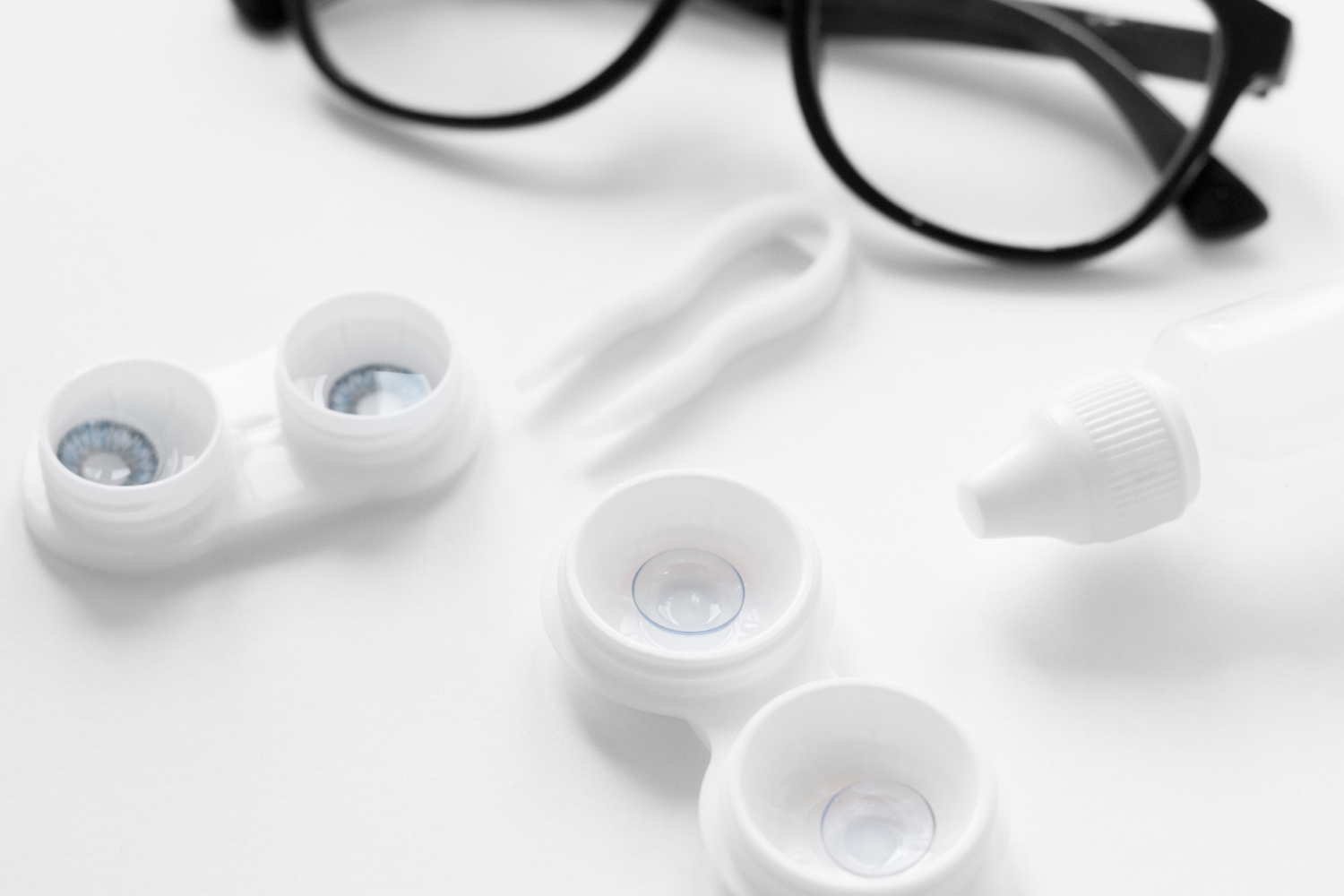
For decades, rigid gas permeable (RGP) lenses have been the gold standard for patients who require precision optics. From keratoconus to post-surgical corneas, RGPs have delivered crisp vision where soft lenses simply could not. Yet as contact lens technology continues to evolve, a new conversation has emerged in exam rooms and specialty clinics alike: is it time to move beyond RGPs?
At University Optometric Center, we find that for many patients, scleral lenses offer not just an alternative — but an upgrade.
The RGP Experience: Effective, but Not Always Comfortable
There is no denying the optical excellence of RGP lenses. Their rigid design neutralizes corneal irregularities and delivers sharp, consistent vision. However, comfort has long been their Achilles’ heel.
Because RGPs rest directly on the cornea, even minor lens awareness can feel pronounced. Wind, dust, and blinking may cause irritation or lens displacement, and adaptation can be lengthy. For patients with dry eye or ocular surface disease, RGP wear may become increasingly challenging over time.
These limitations often lead patients to assume discomfort is simply the price of better vision. Fortunately, that assumption no longer holds true.
Enter Scleral Lenses: A Different Design Philosophy
Scleral lenses redefine how rigid lenses interact with the eye. Rather than sitting on the sensitive corneal surface, sclerals vault over the cornea entirely and rest gently on the sclera — the white, less sensitive part of the eye.
This design creates a fluid reservoir between the lens and cornea, continuously bathing the eye in preservative-free saline. The result is a lens that delivers the optical clarity of an RGP with a dramatically improved comfort profile.
For many former RGP wearers, the transition feels nothing short of transformative.
Why Sclerals May Be the Better Choice
Scleral lenses offer several advantages that make them especially appealing to patients struggling with traditional RGPs:
Enhanced Comfort: Minimal lens awareness, even during long wear days
Improved Stability: Less movement means fewer visual fluctuations and dislodgements
Superior Hydration: The fluid reservoir supports compromised or dry corneas
Consistent Vision: Excellent optics maintained throughout the day
Patients with keratoconus, post-LASIK ectasia, corneal transplants, or severe dry eye often find scleral lenses provide both visual reliability and daily comfort — without compromise.
The Transition from RGP to Scleral Lenses
Replacing RGPs with scleral lenses is not a simple lens swap; it is a carefully guided process. Advanced corneal imaging, precise lens customization, and follow-up care are essential to achieving optimal results.
At University Optometric Center, our specialty contact lens team ensures that each scleral lens is designed for the unique contours of the patient’s eye. Education, handling training, and gradual adaptation all play a role in long-term success.
Importantly, many patients are surprised to discover that scleral lenses often reduce — rather than increase — daily lens-related stress.
Seeing the Future More Comfortably
RGP lenses have served patients well, and for some, they remain an excellent option. But for those seeking greater comfort, stability, and ocular surface support, scleral lenses represent the next chapter in rigid lens technology.
Replacing RGPs isn’t about abandoning what works — it’s about refining it.
At University Optometric Center, we believe better vision should feel as good as it looks.
Contact our office in Irvine or Newport Beach at (949)-854-7122 or (949) 476-2870 to book an appointment.

Optometry
Services

Keep
In Touch
University Optometric Center
OC Optometry Group

