





Night Study Sessions: How Lighting Shapes Your Vision Quality
Night Study Sessions: How Lighting Shapes Your Vision Quality
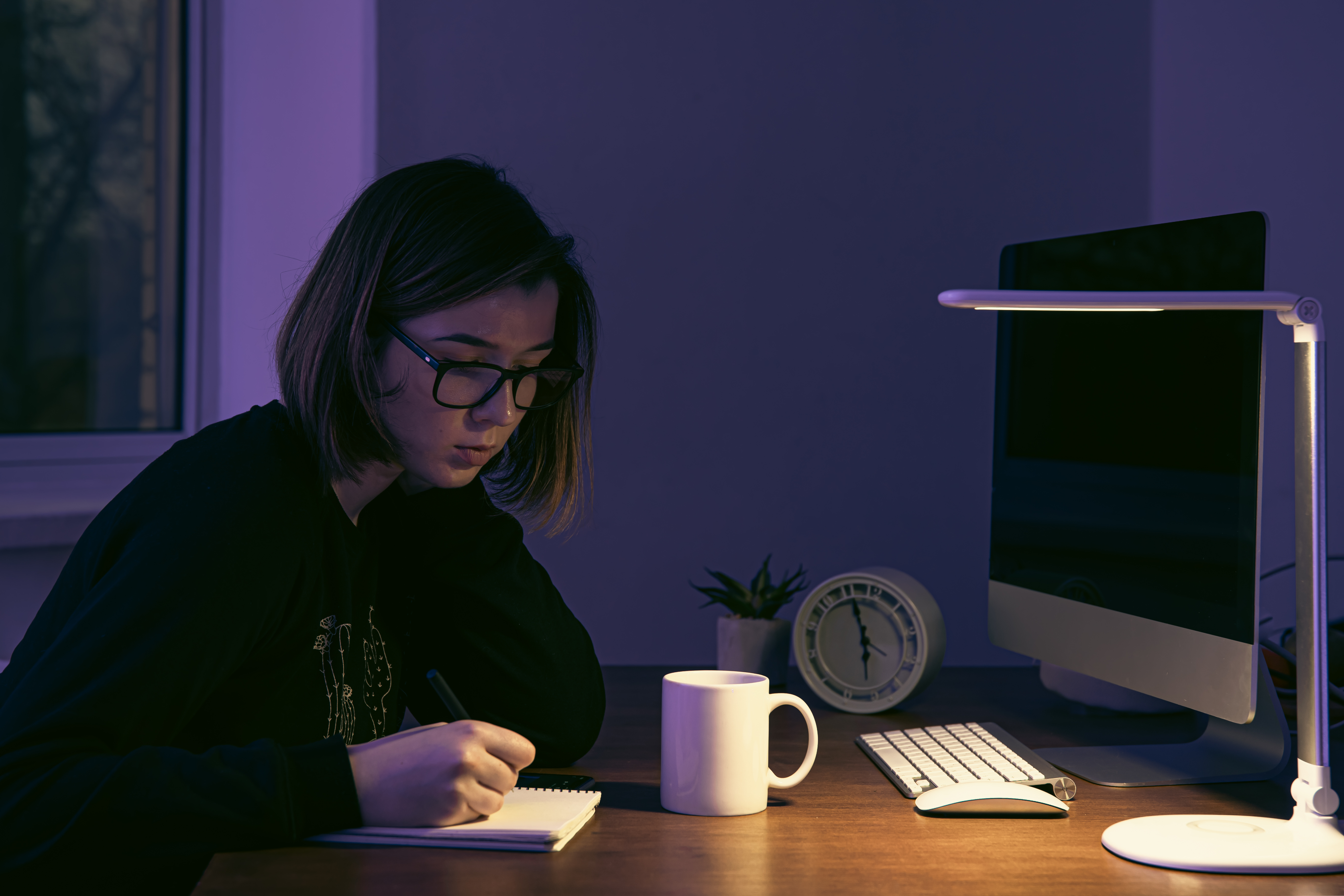
There’s a certain romance to late-night study sessions—the quiet hum of the world asleep, the gentle glow of a desk lamp, and the satisfying rhythm of focused thought. Yet beneath this tranquil scene lies a less poetic reality: your visual system is working overtime, often under less-than-ideal lighting conditions. At University Optometric Center, we believe that understanding how lighting affects your vision is essential not only for comfort, but for long-term eye health and optimal performance.
The Subtle Science of Light and Vision
Vision is not merely about seeing—it’s about how efficiently your eyes interpret light. When illumination is inadequate or poorly distributed, your eyes must strain to compensate. This strain can manifest as blurred vision, headaches, dry eyes, and even reduced concentration.
During nighttime study sessions, the contrast between your bright screen or page and the surrounding darkness becomes more pronounced. This imbalance forces your pupils to constantly adjust, leading to visual fatigue. Over time, this can diminish both the quality of your vision and your cognitive endurance.
The Goldilocks Principle: Not Too Dim, Not Too Bright
Lighting for studying should be “just right.” Too dim, and your eyes struggle to discern details. Too bright, and glare can overwhelm your visual field.
A well-lit study space ideally includes:
- Ambient lighting to softly illuminate the entire room
- Task lighting (like a desk lamp) focused on your reading material
- Minimal glare, especially from screens or reflective surfaces
Position your light source so it falls over your shoulder, not directly into your eyes. This simple adjustment can significantly reduce strain and improve clarity.
Screens, Blue Light, and the Midnight Glow
Modern study habits often involve digital screens, which introduce another layer of complexity. Screens emit blue light, a high-energy wavelength that can interfere with your circadian rhythm and contribute to eye strain.
While blue light is not inherently harmful in moderate amounts, prolonged exposure—especially at night—can lead to discomfort and disrupted sleep patterns. Consider using:
- Night mode or blue light filters on devices
- Anti-reflective coatings on lenses
- The 20-20-20 rule (every 20 minutes, look 20 feet away for 20 seconds)
These strategies help maintain visual comfort without sacrificing productivity.
The Overlooked Role of Contrast and Color Temperature
Lighting isn’t just about brightness—it’s also about quality. Warmer light (yellow tones) tends to be more relaxing and easier on the eyes during evening hours, while cooler light (blue tones) can feel harsh and stimulating.
A balanced approach is key. For night studying, opt for a neutral-to-warm light temperature (around 3000–4000K). This creates a comfortable visual environment that supports sustained focus without overwhelming your eyes.
When Your Eyes Ask for Help
If you frequently experience eye fatigue, dryness, or blurred vision during night study sessions, it may be time for a comprehensive eye exam. Subtle vision issues can become more noticeable under poor lighting conditions, making nighttime an important indicator of your visual health.
At University Optometric Center, we take a personalized approach to vision care—helping you see clearly, comfortably, and confidently in every lighting condition.
Contact our office in Irvine or Newport Beach at (949)-854-7122 or (949) 476-2870 to book an appointment.

Optometry
Services

Keep
In Touch
University Optometric Center
OC Optometry Group

